The Ethics of a Good Picking Up Dog
 Collette May
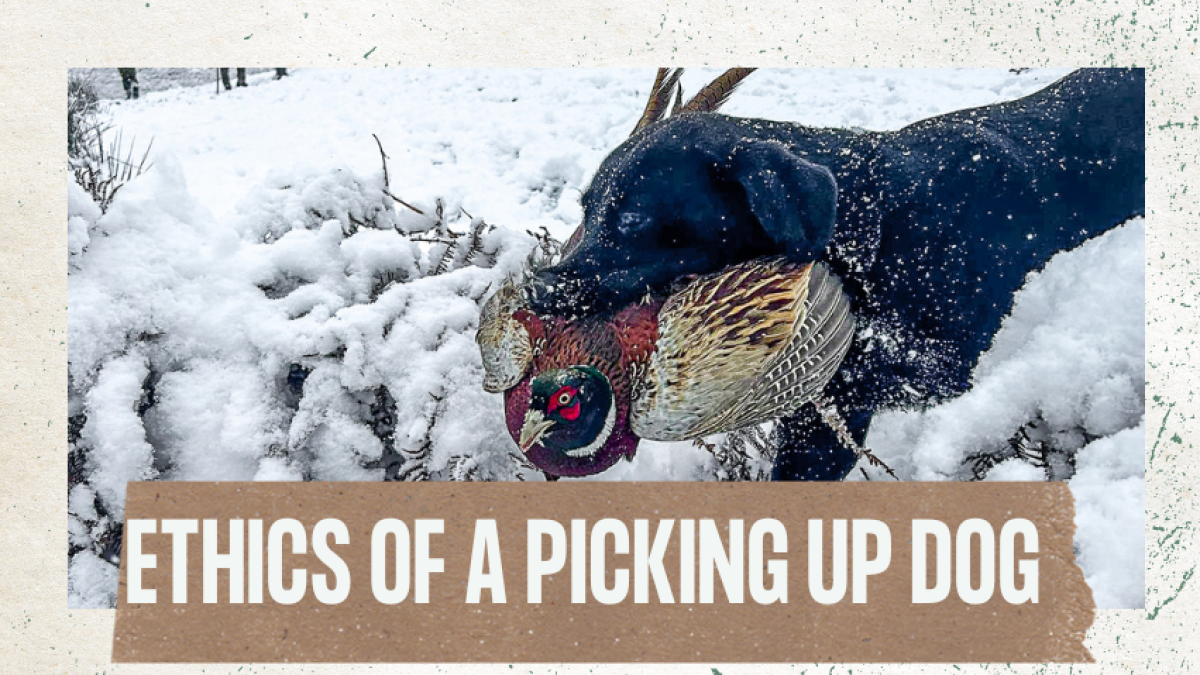
Shoot Ethics, Harm Reduction, Responsibility, and Respect
The Ethics of a Good Picking-Up Dog: Harm Reduction, Responsibility, and Respect
The ethics of shooting and working dogs is a subject that often sparks strong feelings — and rightly so. It’s a conversation worth having carefully, honestly, and without shouting from either side.
One of the concerns I hear most often is this:
“Shooting is a sport for the wealthy.”
Or, “If people eat meat but are uncomfortable with shooting, how do those two ideas sit together?”
These questions don’t come from ignorance or malice, they usually come from a genuine discomfort with suffering and fairness. And that’s where the role of a good picking-up dog is so often misunderstood.
Shooting Exists - Ethics Are About How It’s Done
Whether people agree with shooting or not, the reality is that it exists, just as farming, fishing, and meat consumption exist. Ethics don’t live in denial of that reality. They live in how responsibly those practices are carried out.
This is where picking up is not a “nice extra”, but a moral responsibility.
A well-trained picking-up dog is not about sport, trophies, or prestige. Their role is harm reduction.
Without good dogs:
-
Shot birds can go unfound
-
Wounded game may suffer unseen
-
The outcome is far less humane
With good dogs:
-
Scent is followed accurately and efficiently
-
Wounded birds are located quickly
-
Dispatch, when needed, is immediate and humane
-
Waste and suffering are reduced as much as possible
That is not an optional role it is central to ethical responsibility.
Harm Reduction Is Not Glorification
One of the tensions people often feel is that acknowledging this role somehow means celebrating shooting. It doesn’t.
Harm reduction is a concept widely accepted in many areas of life — medicine, addiction support, farming, conservation. It recognises that while something may not be perfect or universally agreed upon, minimising suffering is always better than ignoring it.
A good picking-up dog doesn’t create harm.
They reduce it.
Respect for the Dog, the Quarry, and the Land
Ethical picking up requires more than instinct, it requires:
-
Steadiness
-
Sensitivity
-
Careful handling
-
Trust between dog and handler
This is why training methods matter so much.
Dogs trained with fear, force, or suppression may retrieve, but they are far more likely to:
-
Rush
-
Damage birds
-
Miss wounded game
-
Shut down under pressure
In contrast, dogs trained through positive reinforcement work carefully, thoughtfully, and thoroughly. They are confident enough to hunt independently, but connected enough to stay responsive. This is exactly what ethical picking up demands.
A dog that trusts its handler works better when the stakes are real.
“But Isn’t It Just for the Wealthy?”
This is another common discomfort, and again, it deserves honesty.
Yes, access to shooting has historically been linked to wealth and land ownership. That reality can’t be ignored. But picking up itself is not about exclusivity or status, it is about doing a necessary job well, regardless of who is hosting the shoot.
Many people involved in picking up:
-
Are there because they care deeply about dogs
-
Care deeply about welfare
-
Care about doing things properly
For them, the ethical line is not drawn at “do I like shooting?”
It’s drawn at “if this is happening, am I ensuring it’s done with responsibility?”
Meat Consumption and Moral Consistency
Another tension people often feel is this:
“I eat meat, but I’m uncomfortable with shooting.”
That discomfort makes sense, but it’s worth sitting with.
If someone chooses to eat meat, they are already participating in a system where animals are killed for food. The ethical question then becomes less about distance and more about transparency and responsibility.
Picking up doesn’t hide death. It faces it directly and works to ensure that if an animal is shot, it does not suffer unnecessarily.
For many people, that honesty is actually the most ethical position available.
Free-Range Game vs. Industrial Farming: An Uncomfortable Comparison
Another point that often gets overlooked in these conversations is how game birds actually live compared to much of the meat we consume without question.
If someone eats meat, they are already condoning animal farming and in many cases, that means supporting systems where chickens are:
-
Intensively reared
-
Kept indoors
-
Selectively bred for rapid growth
-
Living very short lives with limited opportunity to express natural behaviours
By contrast, pheasants and partridges on commercial shoots live entirely free-range lives.
They are:
-
Born and reared outdoors
-
Able to fly, forage, roam, and behave naturally
-
Carefully managed and protected by keepers
-
Living in natural cover with food, shelter, and space
They experience seasons, weather, social structure, and freedom right up until the point they are shot.
That doesn’t mean shooting is beyond ethical scrutiny but it does mean it should be viewed in context.
Criticising game shooting purely because it is a sport, while simultaneously consuming intensively farmed chicken, is a moral inconsistency that’s worth acknowledging.
If welfare matters and for most people it genuinely does then the quality of life an animal has must be part of the conversation, not just the manner of death.
Nothing Is Wasted
It’s also important to say this clearly:
All birds from commercial shoots are eaten.
They are part of the food chain.
They are not discarded.
They are not shot “for fun” and left.
From an ethical standpoint, this matters. It connects shooting back to food, responsibility, and accountability rather than spectacle.
Ethics Isn’t About Comfort
For many people, the discomfort around shooting isn’t really about welfare it’s about visibility.
Shooting is honest.
It’s visible.
It doesn’t hide the reality of meat production behind plastic packaging.
That can be confronting.
But ethical choices aren’t about distance or comfort they’re about how responsibly something is done.
And when it comes to life lived, welfare experienced, and harm reduced, game birds raised and managed well live far better lives than many animals farmed to supply everyday meat.
That doesn’t mean everyone has to like shooting.
But it does mean it deserves a more balanced, informed conversation.
Why This Matters to Me
This is why I’m proud of the dogs I work, the teams I’m part of, and the standards I teach.
Not because it’s glamorous.
Not because it’s “sport”.
But because doing it properly matters.
A good picking-up dog represents:
-
Accountability
-
Skill
-
Respect
-
Care
Ethics in the field aren’t about pretending shooting doesn’t exist.
They’re about recognising responsibility where it does and meeting it with integrity.
Good dogs don’t increase harm.
They reduce it.
And that, for me, is something worth standing behind.